Adam Atanas
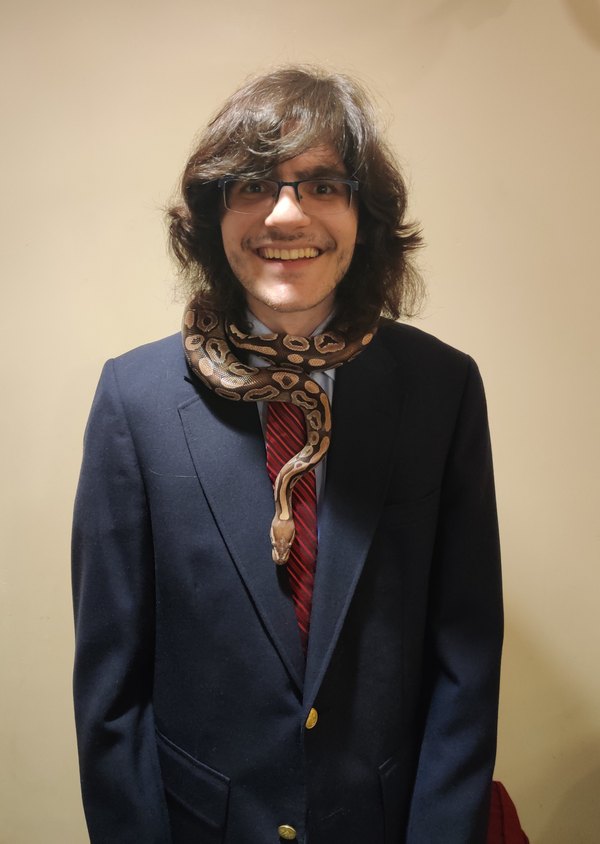
I am a computational neuroscientist and AI researcher with a PhD from MIT. I am interested in mechanistic interpretability, oversight, and emergent behavior in agent systems.
My research has covered neural representations, probabilistic modeling, reasoning in large language models (LLMs), construction and evaluation of AI agents, data processing, and distillation of LLM knowledge into interpretable programs. You can read my publications here.
In my free time, I've been pursuing a few independent research projects, and I'm also an avid game developer.
Work experience
SES AI, October 2024 to June 2026
Associate Director (June 2026); Senior Scientist (October 2024 to May 2026).
I led frontend and backend development of the first versions of Molecular Universe, a scientific AI platform for molecular search, analysis, and electrolyte recommendations. I led the creation of Molecular Universe's molecule recommendation algorithm, which combines an agentic LLM framework that retrieves structured data from tens of thousands of battery papers and patents with downstream machine learning techniques that utilize that data. I also developed novel machine learning techniques by integrating LLMs into new evolutionary algorithm hypothesis-checking loops to distill LLM knowledge and reasoning into interpretable Python code. Finally, I led the development of a multi-agent system that synthesizes literature, patents, models, and molecular databases to propose electrolyte formulations. Alongside this work, I first-authored research on LLM activations and reasoning correctness.
MIT, Flavell Lab, 2018 to 2024
Postdoctoral Associate (2023 to 2024); Graduate Researcher (2018 to 2023).
Together with Jungsoo Kim, I developed probabilistic models of whole-brain activity in freely moving C. elegans, which showed how neural representations of behavior vary across timescales and internal states using our C. elegans Probabilistic Neural Encoding Model (CePNEM). We also created the Automated Neuron Tracking System for Unconstrained Nematodes (ANTSUN) image-analysis pipeline, which converts calcium imaging data into full, identified neural traces. The pipeline uses neural segmentation, registration, behavioral image analysis, and neural networks for tracking neurons and identifying their cell types. We made our datasets publicly available at wormwideweb.org, where they have become a cornerstone for theoretical neuroscience modeling efforts.
Education
- Massachusetts Institute of Technology, 2017 to 2023: PhD, Computational and Systems Biology. Advisor: Steven W. Flavell.
- Harvard College, 2013 to 2017: BA, Mathematics and Computer Science (double major), minor in Astrophysics. Magna cum laude, Highest Honors in Field.